
The prices of food items like mutton rose by 14 per cent, arhar by 9 per cent, gram by 4 per cent, fruit and vegetables by 2 per cent during the week. However, a major decline was registered in mineral index, as prices fell by 16.8 per cent mainly due to softening iron ore prices by 24 per cent and felspar by 3 per cent.

Inflation shot up by 0.1 per cent to over 41-month high of 7.61 per cent week ended July 31, mainly due to surge in prices of fruit and vegetables, edible oil and other manufactured products.

Hardening prices of manufactured items during the month may refrain the Reserve Bank of India from cutting rates in its policy review on February 8.

Factory output in June likely rose 5.4 per cent from a year earlier, faster than the 4.7 per cent growth in May, according to a poll of 27 economists.

'In addition, we have geopolitics and politics and all the other things that will affect commodity prices.'

The wholesale price-based inflation stood at 0.92 per cent in the previous week.

As per commerce and industry ministry data, food inflation fell to 4.91 per cent in March from 7.79 per cent in the previous month.

Since March 2020, WPI food inflation rate continued to fall but the CPI-food inflation rose, signaling a breakdown in supply chain from the mandis to the final household.

The wholesale price-based inflation stood at 12.13 per cent during the corresponding week a year ago.
Costlier fuel products and manufactured items including edible oils pushed up inflation to 4.95 per cent during the week ended February 26.
Inflation rose to 4.10 per cent for the week ended August 11, against 4.05 per cent in the previous week, mainly due to higher prices of fruits and vegetables, bajra, masoor, gram and some manufactured goods.

Inflation, as measured by the Wholesale Price Index, was 7.55 per cent in May. In June last year, it was 9.51 per cent.

The wholesale price index-based inflation remained negative for the 11th consecutive week since June 6 mainly on high base. It was 12.82 per cent for the corresponding week last year. Prices of inland fish shot up by 25 per cent over the previous week, eggs became dearer by 10 per cent, masur dal was costly by 8 per cent, milk price went up by 5 per cent, and fruits and vegetables became expensive by 3 per cent.

From the Sensex pack, HCL Technologies, Infosys, Wipro, Bharti Airtel, Larsen & Toubro, Mahindra & Mahindra, Tata Consultancy Services and Asian Paints were the major gainers. Axis Bank, IndusInd Bank, Bajaj Finance, JSW Steel, State Bank of India and Tata Steel were among the major laggards.

Vegetables account for 5.44 per cent of the Consumer Price Index.
Households continued to bear the brunt of increased cost of living with inflation rising by 0.35 per cent to 7.96 per cent for week ended August 7, mainly due to costlier vegetables, petrol, diesel and aviation turbine fuel.
Inflation shot up to a four-year high at 8.17 per cent for the week ended August 21 despite a number of steps, including duty cuts on petroleum products and steel, taken by the government to rein in prices.
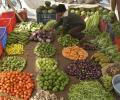
Onion prices, however, continued to rule high with 79.78 per cent increase in September.

The wholesale price-based inflation shot up to an all-time high of 10.49 per cent in April, on rising prices of crude oil and manufactured items. Also, a low base of April last year contributed to the spike in inflation in April 2021. The WPI inflation was 7.39 per cent in March 2021, and (-) 1.57 per cent in April 2020. This is the fourth straight month of uptick seen in the wholesale price index (WPI)-based inflation.

The wholesale price-based inflation rose to an eight-month high of 1.48 per cent in October, as manufactured products turned costlier. The WPI inflation was 1.32 per cent in September and zero per cent in October last year. This is the highest level of wholesale price index-based (WPI) inflation since February when it was 2.26 per cent.
Wholesale price-based inflation stood at 8.90 per cent in the corresponding week a year ago.

RBI in its policy review last month kept interest rates unchanged and said it sees an upside risk to inflation.
Inflation rose to 4.27 per cent for the week ended June 30 as compared to 4.13 per cent in the previous week mainly due to increase in prices of food articles and some manufactured items.
Inflation based on the wholesale-price-index was unchanged at 3.5 per cent for the week ended December 29, 2007.
Inflation crossed five per cent mark to touch 5.16 per cent for the week ended September 30 from 4.77 per cent in the previous week mainly due to increase in the prices of energy, food and manufactured items.

Continuing decline in food prices, including vegetables, pulled wholesale price inflation to a five year low of 1.77 per cent in October.
Overall food inflation rose to 10.74 per cent in May, from 10.49 per cent in the previous month. Food articles have 14.3 per cent share in the WPI basket.

The retail inflation rate breached the 6 per cent upper tolerance limit of the RBI for the first time in seven months in January, while the wholesale price index stayed in double-digits for the 10th month in a row, showed two sets of data released by the government on Monday. Retail inflation, the key input for the RBI while reviewing the repo rate every two months, soared during the month mainly because of a spike in certain food items. The previous high for retail inflation was 6.26 per cent in June 2021.
Inflation based on the wholesale price index moved up to 4.54 per cent for the week ended November 26 from 4.32 per cent in the previous week, according to data released by the government on Friday.

Retail inflation rose marginally to 9.84 per cent in September, mainly due to a hike in food prices, particularly of vegetables.
During the week, prices of fish marine were dearer by 10 per cent, arhar, fruit and vegetables by 2 per cent each while urad and moong rose by 1 per cent each.
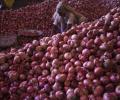
Retail inflation, based on Consumer Price Index, hit a 15-month high of 4.88 per cent in November
Inflation rose to 5.32 per cent for the week ended December 9, from 5.16 per cent in the previous week mainly due to increase in prices of some food articles including vegetables.
Inflation remained unchanged at the previous week's level of 5.16 per cent for the week ended October 7

Wholesale price-based inflation spiked to a record high of 15.08 per cent in April on rising prices across segments from food to commodities. The WPI-based inflation was 14.55 per cent in March and 10.74 per cent in April last year. "The high rate of inflation in April 2022 was primarily due to rise in prices of mineral oils, basic metals, crude petroleum & natural gas, food articles, non-food articles, food products and chemicals & chemical products etc. as compared to the corresponding month of the previous year," the commerce and industry ministry said in a statement.
Inflation declined to 5.16 per cent for the week ended December 2 from 5.30 per cent in the previous week mainly due to a fall in the prices of fuel and food items.
Inflation rose to 3.55 per cent for the week ended April 15, from 3.24 per cent in the previous week mainly due to costlier manufactured and non-food items.
Inflation fails marginally to 4.52 per cent for the week ended July 15 from the 4.68 per cent in the previous week, despite increase in prices of vegetables, some edible oils and metals.
Inflation declined to 4.68 per cent for the week ended July 8, from 4.96 per cent in the previous week mainly due to cheaper fruits, vegetables, pulses and milk.
 © 2026 Rediff.com - Advertise with us - Disclaimer - Privacy Policy - Sitemap - Feedback - About us - Terms of use - Grievances